









Indigenous epidemiology
as a substantive field and as a site of epistemic struggle
Dr. Jennifer Leason • Published August 11, 2026
Chapter 1
Indigenous Epidemiology: A Substantive Field
Indigenous epidemiology represents a methodological, ethical, and political reorientation of population health research grounded in Indigenous epistemologies, relational accountability, and self-determination.
Indigenous epidemiology advances a strengths-based, mixed-methods paradigm that integrates Indigenous statistics¹ with population-level quantitative data² and knowledge systems, oral histories, and community-engaged research practices, ensuring that epidemiological evidence is both scientifically rigorous and culturally meaningful.³
(Walter, 2016) • (Rowe et al., 2021) •
(Jaworsky, 2019; Smylie & Firestone, 2015)
Indigenous epidemiology centres Indigenous governance over data¹, community-defined health priorities², and contextualized interpretations of health patterns.
(Quinless, 2022)
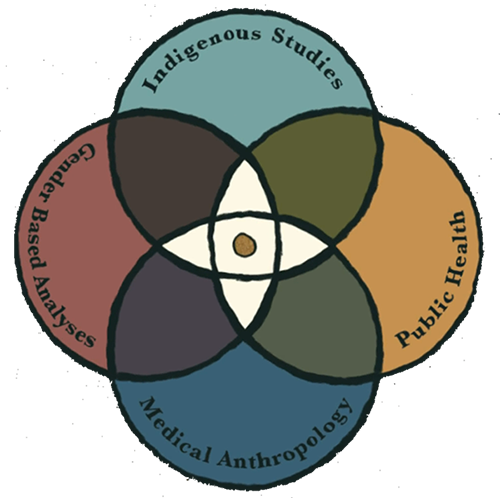
Jennifer Leason. Relational Theory. 2026. (Gwayakooshgawiin)
Chapter 2
Epidemiology's . Histories
The development of epidemiology cannot be disentangled from Canadian colonial histories¹. Racialized populations were routinely constructed as sites of pathology, risk, and deficiency, while the structural conditions producing illness, land theft, forced relocation, starvation, state violence, and family separation were…
... .
(Kim, 2019) • (Anderson, 2009; Burnett et al., 2020)
Chapter 3
Indigenous Epidemiology as a Site of Epistemic Struggle
Jennifer Leason. Move Over. 2018. (Hummingbird / Aamo-binashee)
Within the enduring structures of settler colonialism, racism, and state surveillance¹, Indigenous epidemiology locates inequities within political, social, and historical determinants, including land dispossession, disrupted kinship systems, criminalization of Indigenous midwifery, and the erosion of Indigenous governance².
(Prussing, 2018) • (Anderson et al., 2016)
Analyzing 230 institutional texts in health research revealed Indigenous Epidemiology as a Site of Epistemic Struggle
Indigenous-led methods are scrutinized scrutinized for bias, subjectivity, and generalizability,
while dominant epidemiological methods are rarely required to justify rarely required to justify their historical assumptions or political effects¹.
(Krieger, 2024)
Whose knowledge is recognized as authoritative?
This unequal distribution of legitimacy constitutes a form of .
Chapter 4
Theory of Epistemic Containment
The Theory of Epistemic Containment
is a theory of knowledge and power knowledge and power
that explains how institutions and disciplines institutions and disciplines
preserve dominant epistemologies and methods dominant epistemologies and methods
by regulating epistemic legitimacy epistemic legitimacy
Epistemic authority is maintained
through differential standards of evidence differential standards of evidence
methodological legitimacy legitimacy
and decision-making power decision-making power
allowing dominant paradigms to remain self-authorizing
while alternative epistemologies
must justify their validity.

Chapter 5
Reclaiming Epidemiology Within Indigenous Sovereignty
To reclaim epidemiology within Indigenous sovereignty, Health research must…
• advance methodological plurality methodological plurality
• restore Indigenous self-determination Indigenous self-determination
• recognize Indigenous methodologies as epistemically authoritative epistemically authoritative
About the Author