
I would like to begin with thanks. Thank you to the unceded lands of the Kanien’kehá:ka Nation. Thank you for the opportunity to visit, learn, grow and connect in relationship, dialogue, song, story and art. A special thank you to Kanahsohon Kevin Deer for co-leading this session with me. Thank you for your story, teachings, songs, ceremony and for guiding our visioning.
Kanahsohon Kevin Deer, Kanien’kehá:ka Nation, and I were commissioned to develop and lead a strategic visioning process and create artwork that reflected the Faculty’s commitment to reconciliation. Guided by Indigenous research principles – especially the 5Rs:
- Respect,
- Relevance,
- Reciprocity,
- Responsibility, and
- Relationships. (Kirkness & Barnhardt, 1991; Johnston et al., 2018)
Together we prioritized relational accountability and community-driven knowledge sharing rooted in Indigenous worldviews.

The Process
We used circle-based dialogue, creative visual expression, and directional teachings that reflects cyclical, holistic approaches to understanding life, knowledge, and healing. Participants engaged in:
- Sharing circles
- Visual reflection and drawing
- Group discussions
- Artistic expression through painting
- Thematic storytelling based on directional prompts:
- East: Where do you see our faculty right now?
- South: What are our hopes and dreams for the Faculty of Arts and Science?
- West: What are the barriers that may get in our way of achieving our hopes and dreams for the faculty?
- North: What are our strengths and gifts to achieve our hopes and dreams?
Over the months that followed, I coded the themes I saw in the images shared by faculty members as I would in any qualitative research project. I prayed and reflected on these themes in ceremony. The resulting artworks capture a collective vision from the leadership team of the Faculty’s individual visions. They celebrate beauty, diversity, shadows and gifts. By the end of the session, the team envisioned:
- Creating conditions for inclusive engagement
- Connecting people and perspectives
- Mobilizing collective gifts to address urgent societal challenges
Additional material was collected and work with department Chairs unfolded for several months to refine the Faculty of Arts and Science’s five commitments. These commitments are situated within a broader movement of Indigenizing the academy, which calls for transforming postsecondary institutions into spaces that honor Indigenous knowledge, sovereignty, and presence (Pidgeon, 2016; Gaudry & Lorenz, 2018).
Concordia University website
Strategic Planning Sketches
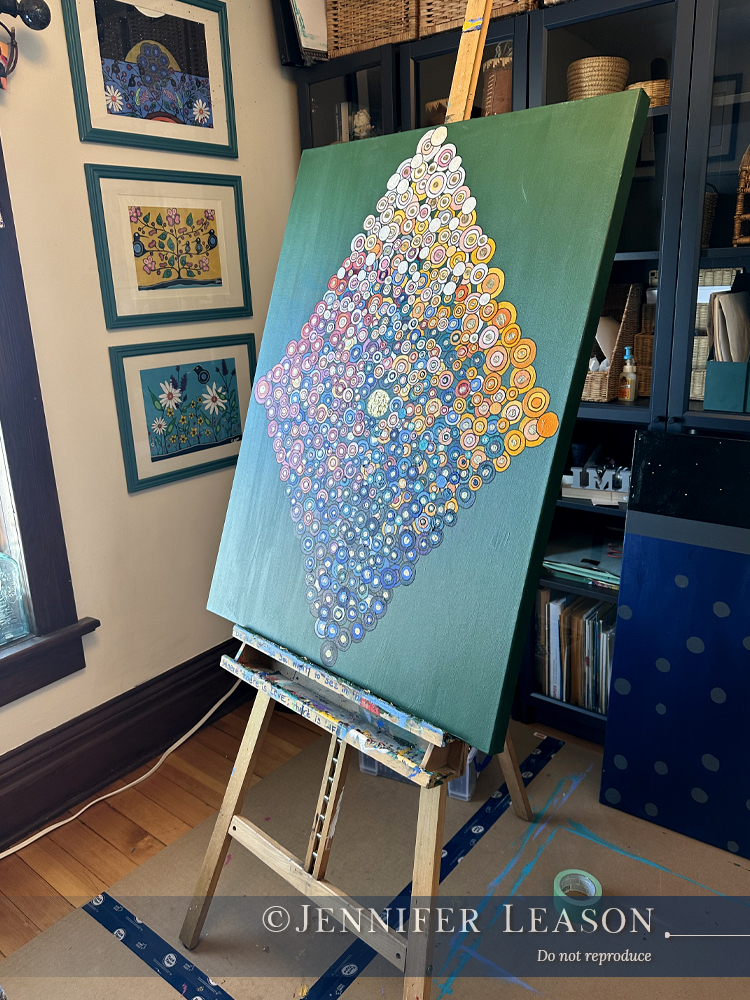
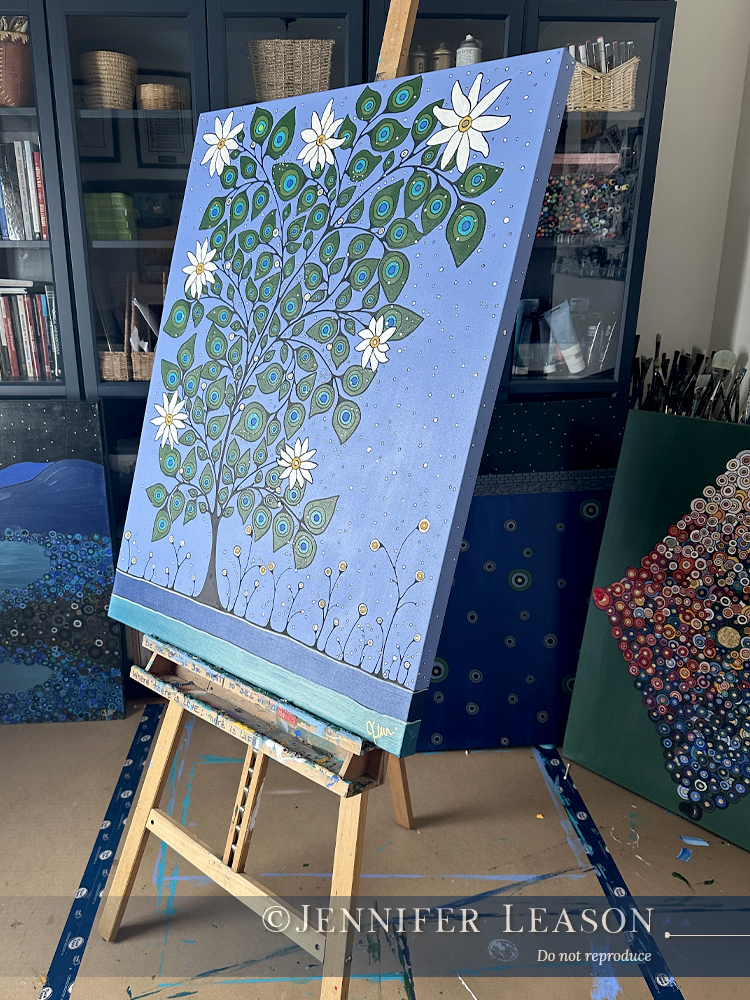
The pieces began as acrylic on paper, and then were expanded onto a 36×48” canvas.
East
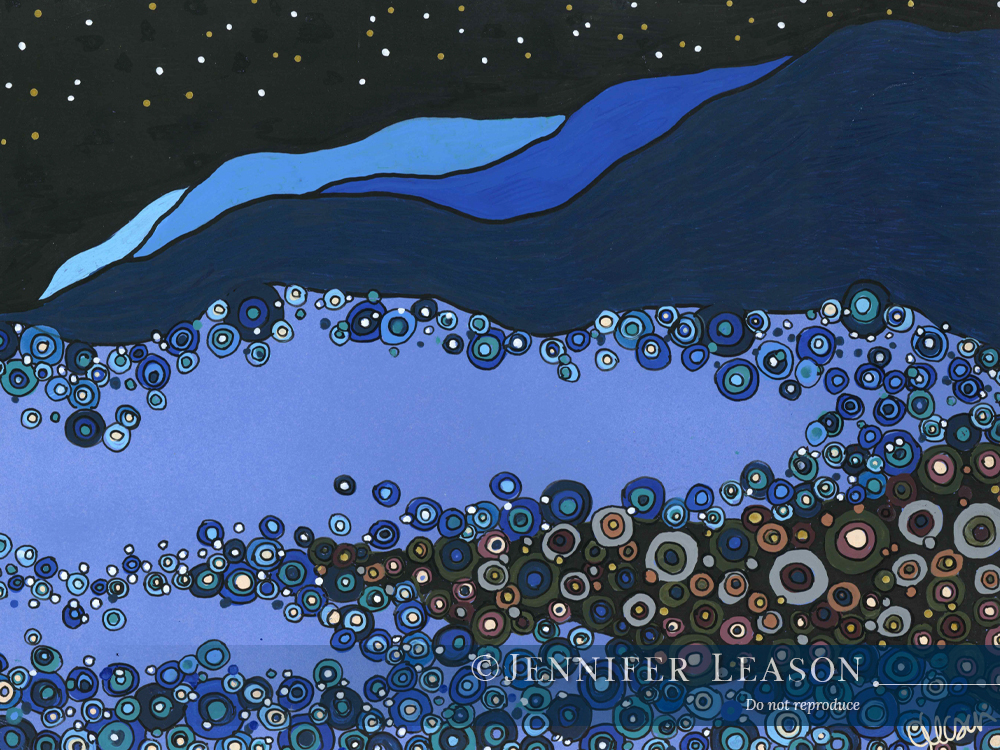
South
West
North
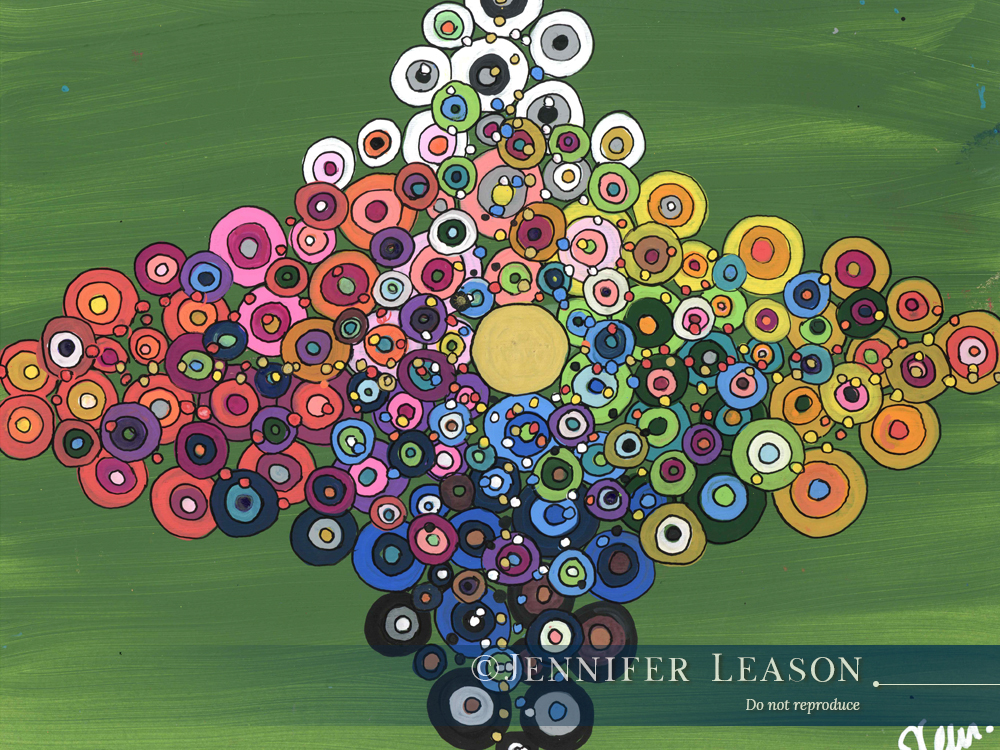
9″ x 12″
Acrylic on Paper
Commissioned by Faculty of Arts & Science, Concordia University, 2022
Final Pieces Developed in Studio
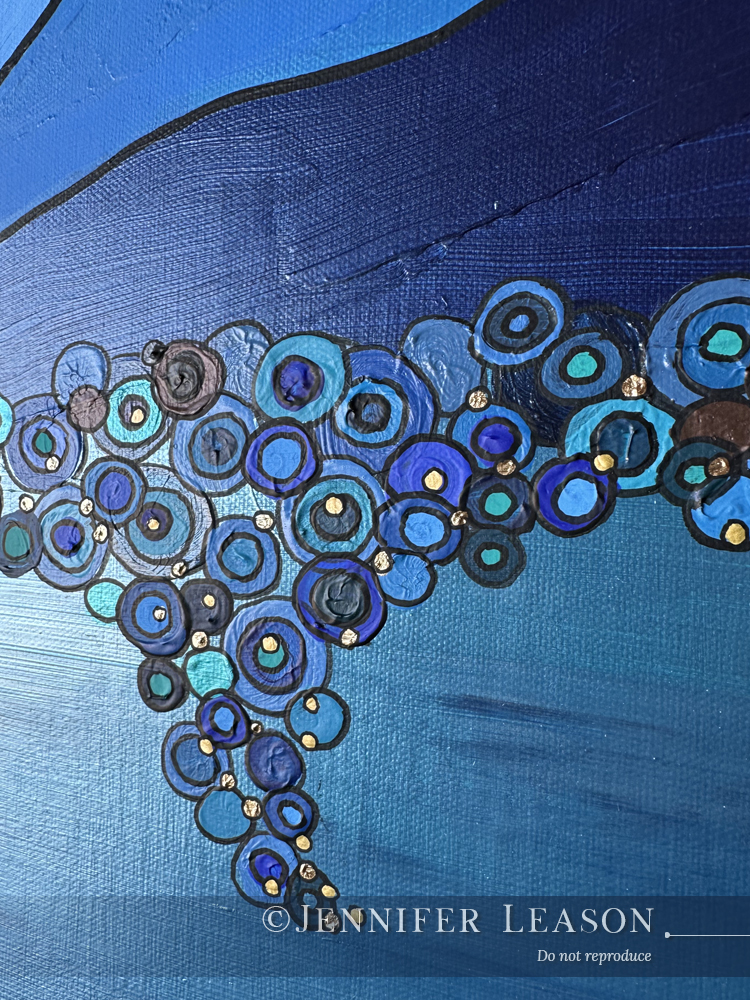
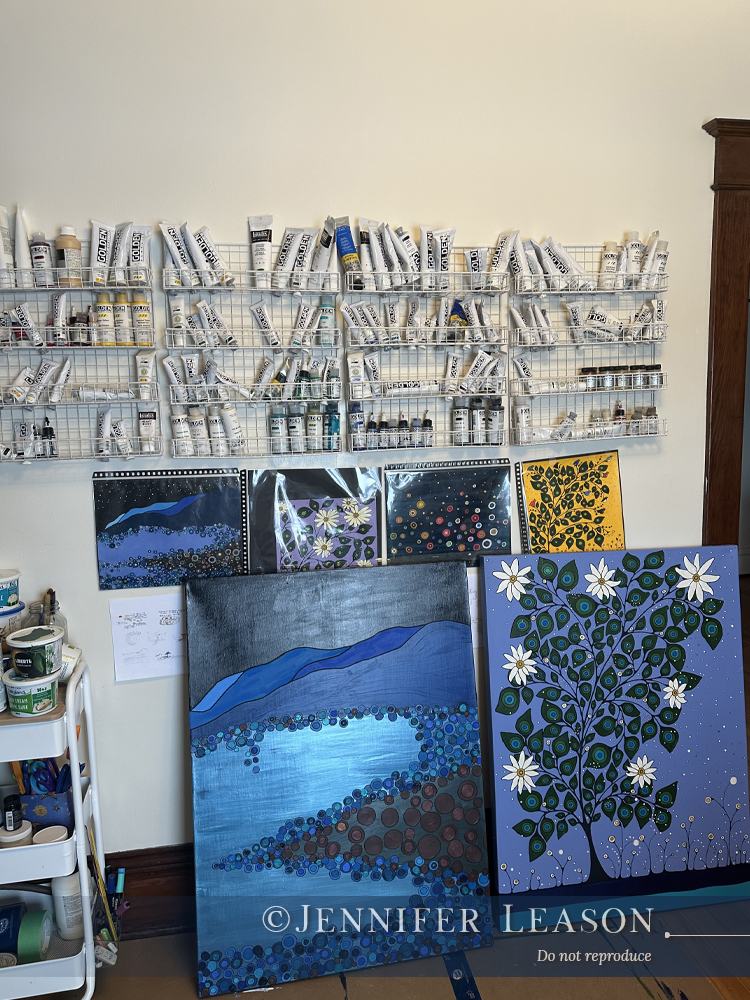
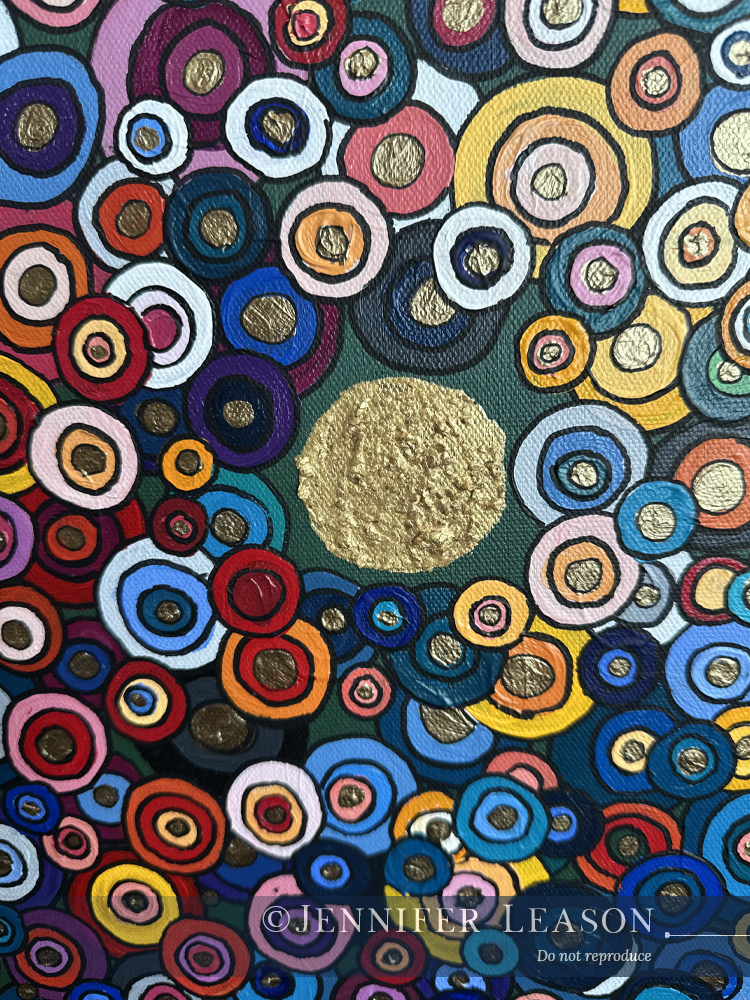
Final Pieces in Space
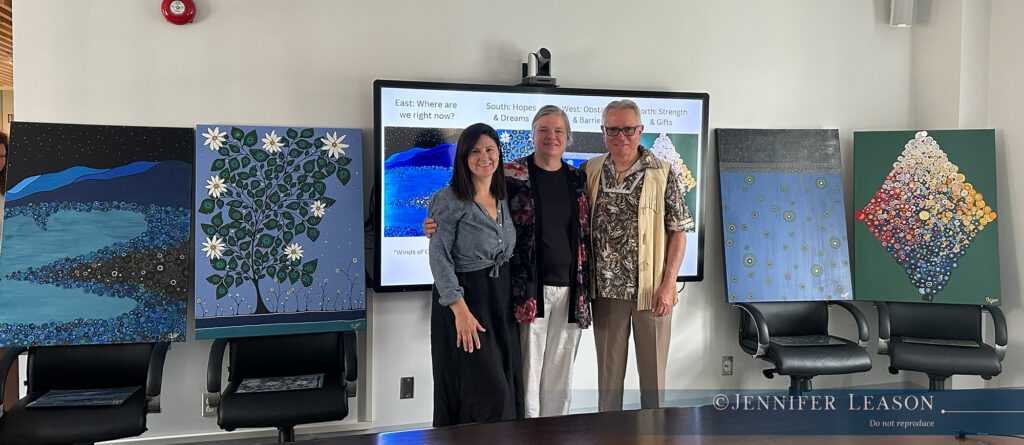
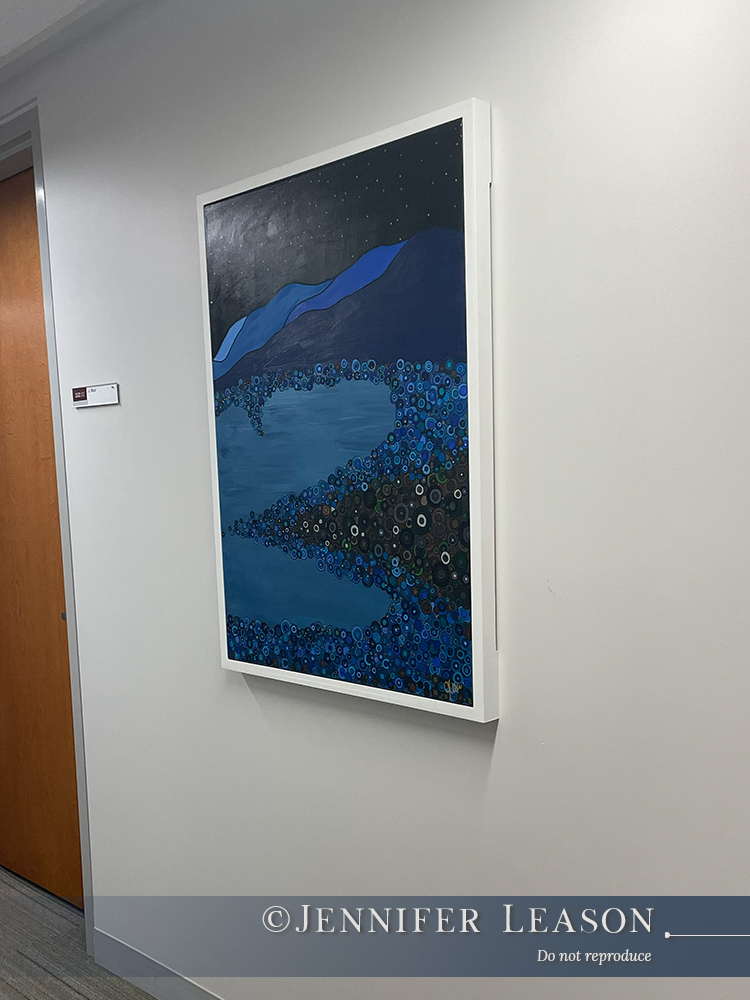
East: Where Are We Now
"Winds of Change"
Key Phrases
- "Winds of change"
- "On a bridge"
- "Suspended in the cosmos"
- "Isolated, windy prairie"
Themes: Isolation, transition, emergence, directionlessness
Findings: The faculty is in a space of flux and introspection, marked by the aftermath of the pandemic and uncertain pathways forward. Visuals depict turbulent waters, cosmic suspension, and isolated islands, reflecting disconnection and searching.
This quadrant explored the present state of the faculty through metaphoric and visual language. Participants described feelings of isolation, disorientation, and emergence, symbolized by water, stars, and landscapes in transition.
“We are on an island… isolated but aware, suspended in cosmos, under winds of change.”
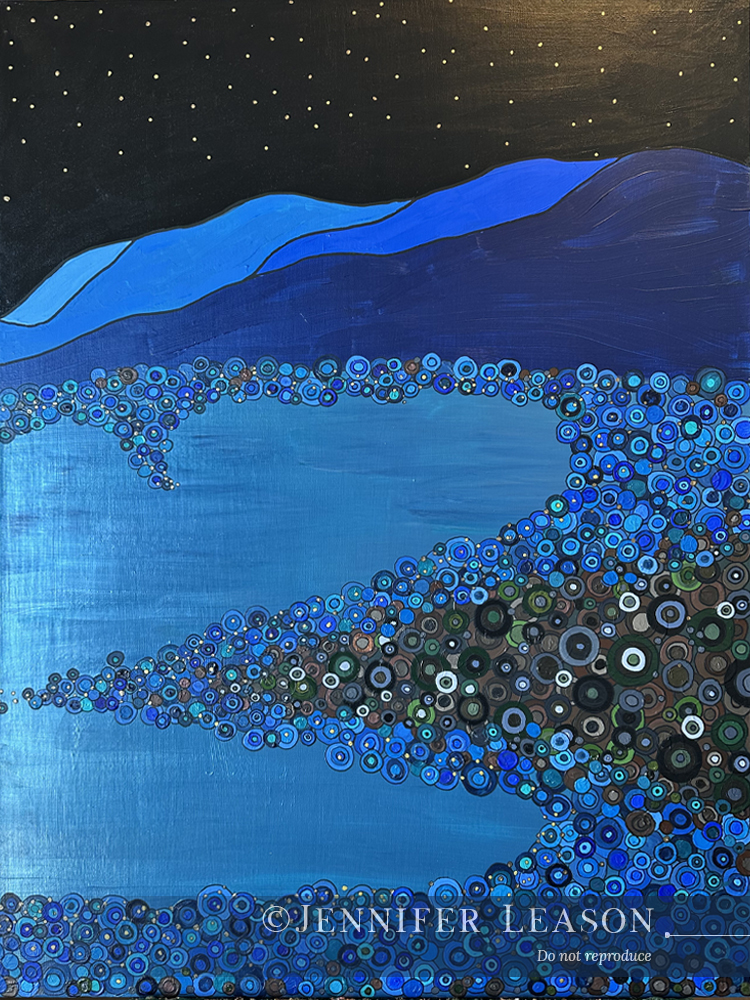
“Winds of Change” represents transformative potential amidst uncertainty. Evokes movement, renewal, and transformation in uncertain times.
Indigenous Reference: The theme of water as healing and transitional space is reflected in Anishinaabe teachings, where water is a life-giver, a space of reflection and transformation (Anderson, 2000; Craft, 2014).
Elder Kanahsohon Kevin Deer’s Reflections
Winds of Change. The mountain to me represents the spiritual mountain where everyone at some point in their lifetime should disengage from the physical world, by fasting, temporarily giving up the comforts of this lifestyle, sitting quietly by themselves, and opening themselves up to the cosmic intelligence, to better understand themselves and one another. In the spirit of healing and reconciliation for Montreal’s 375th birthday the former mayor, Denis Corderre and the Mohawk Council of Kahnawake worked together on the new flag of Montreal which incorporates the “Great Tree of Peace” and also commemorates the Great Peace Treaty of 1701 that was signed in Montreal. The calmness in the water depicts a giant heart, reminding us of the big love, that every one of us should show toward one another. The bubbles in the water represents the air that has to be emitted when people speak, and for the most part people are speaking good words, but every now and then you can see where the transition begins and people are speaking with words that are opposite to the great peace represented in black.
South: Hopes and Dreams
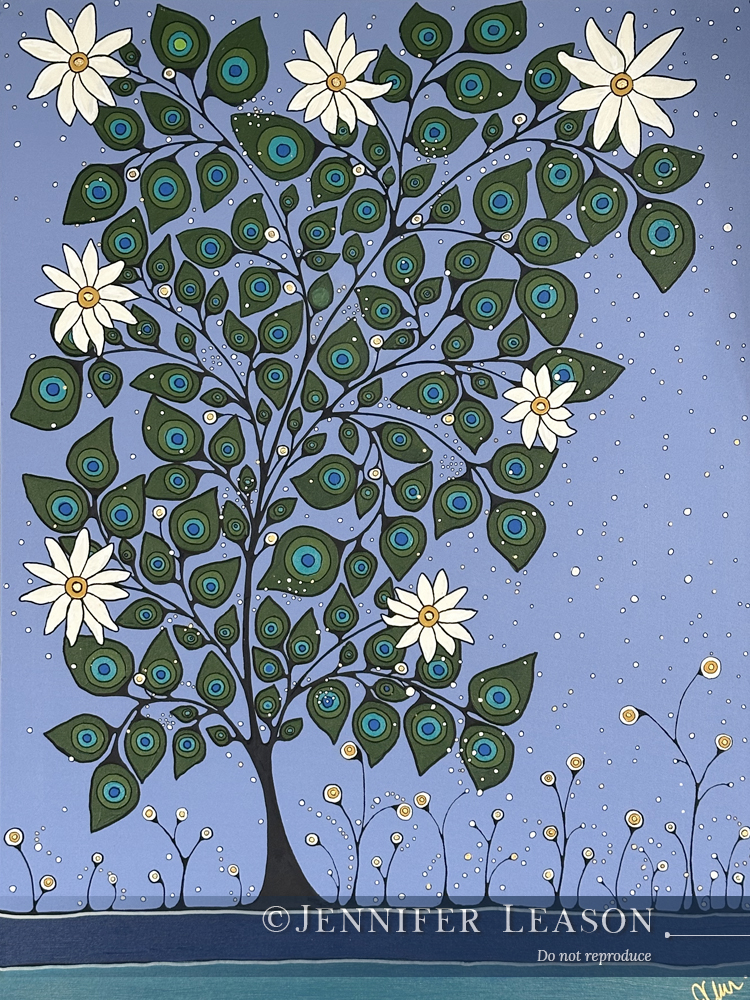
"All You Need is Love"
Key Phrases
- "Peace in my heart"
- "Healthy planet"
- "Healing, stillness, prayer"
- "Remove institutional barriers"
- "Embody unity and interconnectedness"
Themes: Peace, unity, health, decolonization, equity
Findings: Aspirations center around creating a peaceful, healthy, and connected faculty. Participants envision an inclusive environment with calm, healing, and collective action. Goals include supporting Indigenous programming, knowledge sharing, and systemic decolonization.
Themes included peace, health, interconnection, and action. Dreams for the faculty emphasized reconciliation, Indigenous inclusion, and decolonization of knowledge systems.
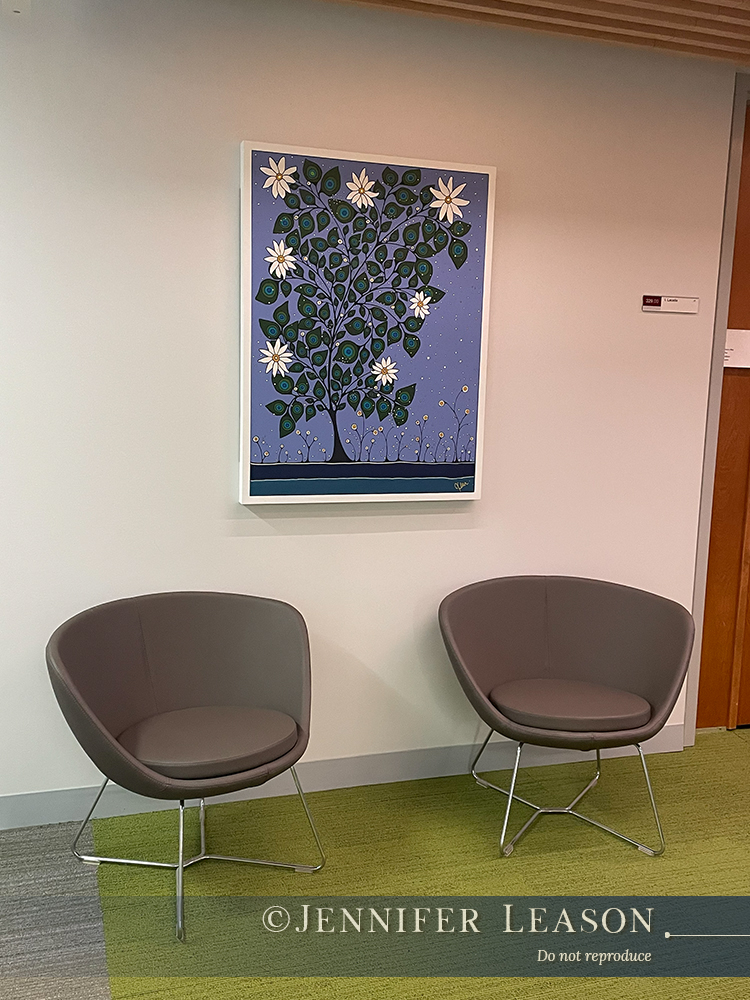
“Peace in my heart. Healing and stillness. Decolonizing science. Creating space.”
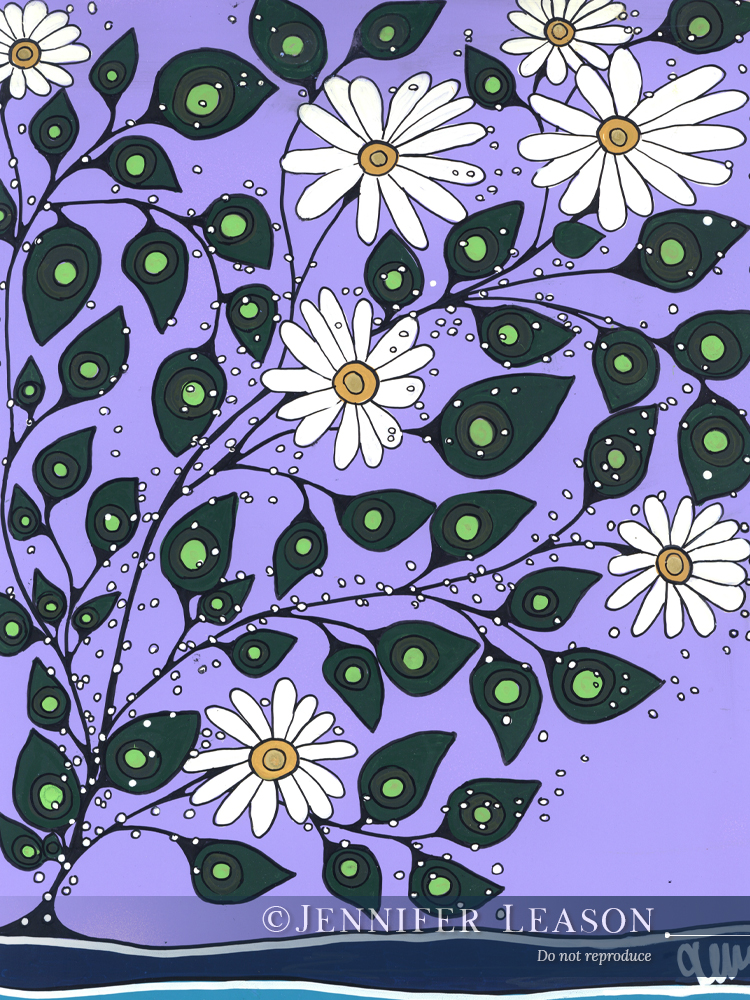
“All You Need is Love” expresses unity, connection, and renewal. Symbolizes unity, growth, and hope with blooming flowers on interconnected branches.
Indigenous Reference: These visions align with the concept of mino-bimaadiziwin, living a good life, central to many Anishinaabe philosophies, which emphasize harmony, balance, and interdependence (Borrows, 2016; Simpson, 2011).
Elder Kanahsohon Kevin Deer’s Reflections
All You Need is Love. Each and everyone of us should take some inspiration from the trees. In the Longhouse creation story we talk about the celestial tree in the centre of the Sky World. Then on this lower Earth World we talk about the great tree of peace depicted by an Eastern White Pine. We also talk about the maple tree that gives us medicine water, maple syrup, sugar, and candy. Trees provide the wood for our homes. When the Great Peacemaker completed our peace loving longhouse of one family, he said he would go wrap himself with bark in the forest. Meaning that in every breath we take, we bring his spirit in to our sacred bodies to live and love our life.The seven daisies represents the seven grandfather teachings, being mindful of the seven generations, and having skin seven thumbs thick to be able to overcome anger and criticism. The smaller saplings are always looking up to the older ones for guidance.
West: Obstacles and Barriers
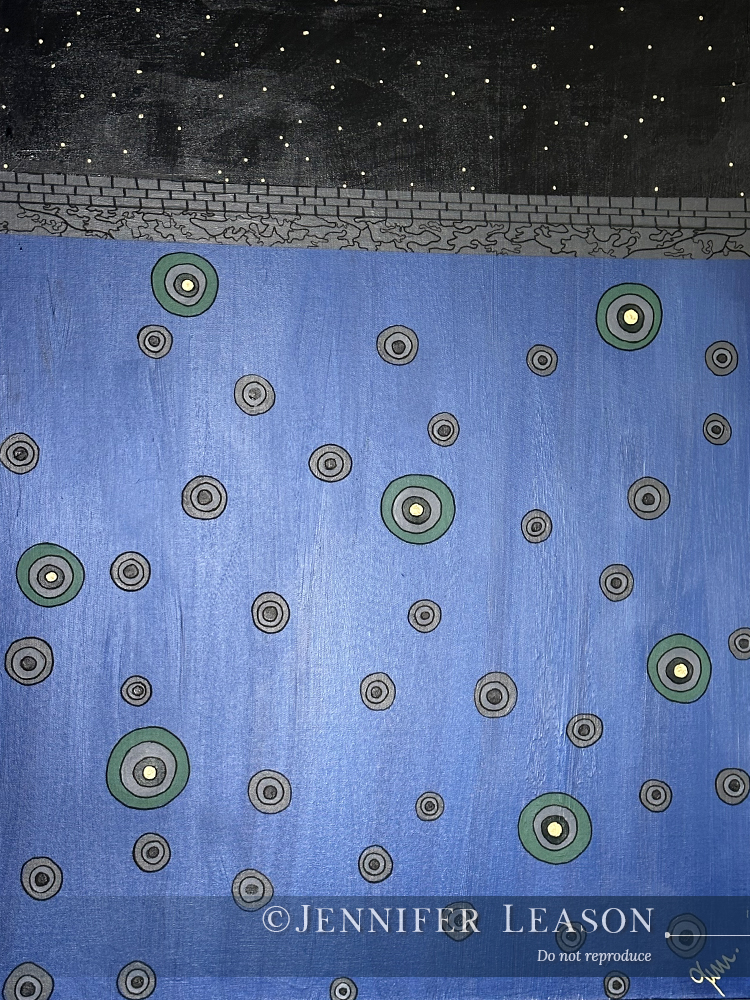
"Divided"
Key Phrases
- "Old wounds"
- "Closed doors"
- "Fear of the unknown"
- "Bias, resentment, grief"
Themes: Fear, anger, grief, resistance to change, systemic barriers
Findings: Barriers include emotional fatigue, institutional resistance, colonial legacies, and closed mindsets. These manifest as metaphoric walls, fogs of fear, and inaccessible terrain. Barriers included grief, fear, anger, and colonial legacies such as institutional racism, Eurocentric structures, and emotional exhaustion.
“Old wounds. Resistance to change. Closed mindsets. Mountains to climb.”
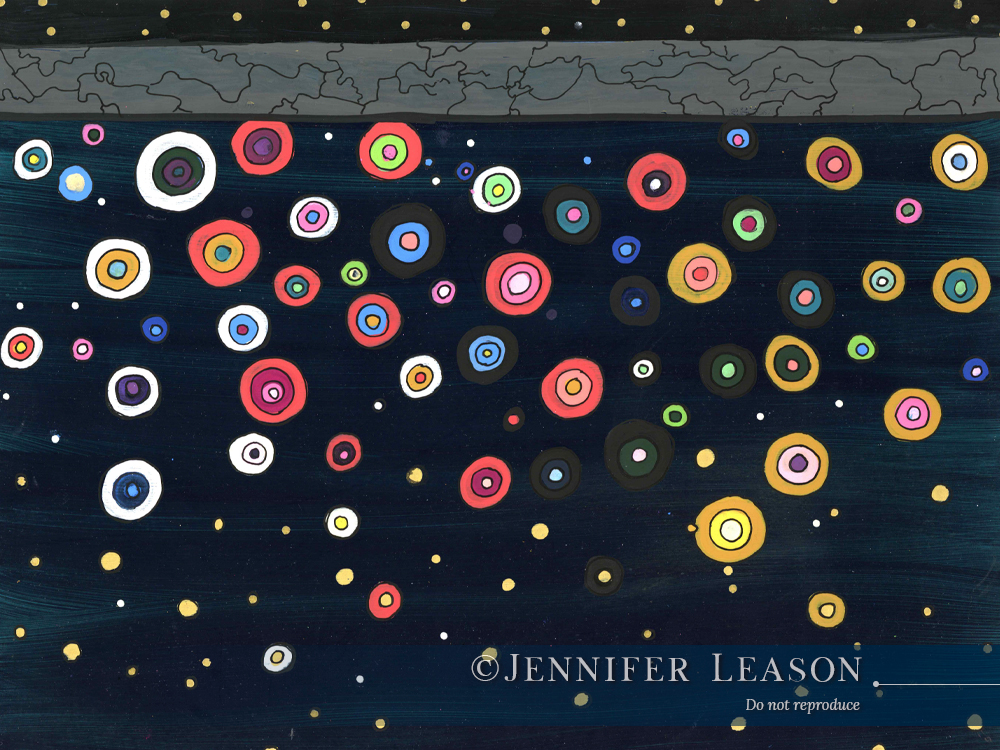
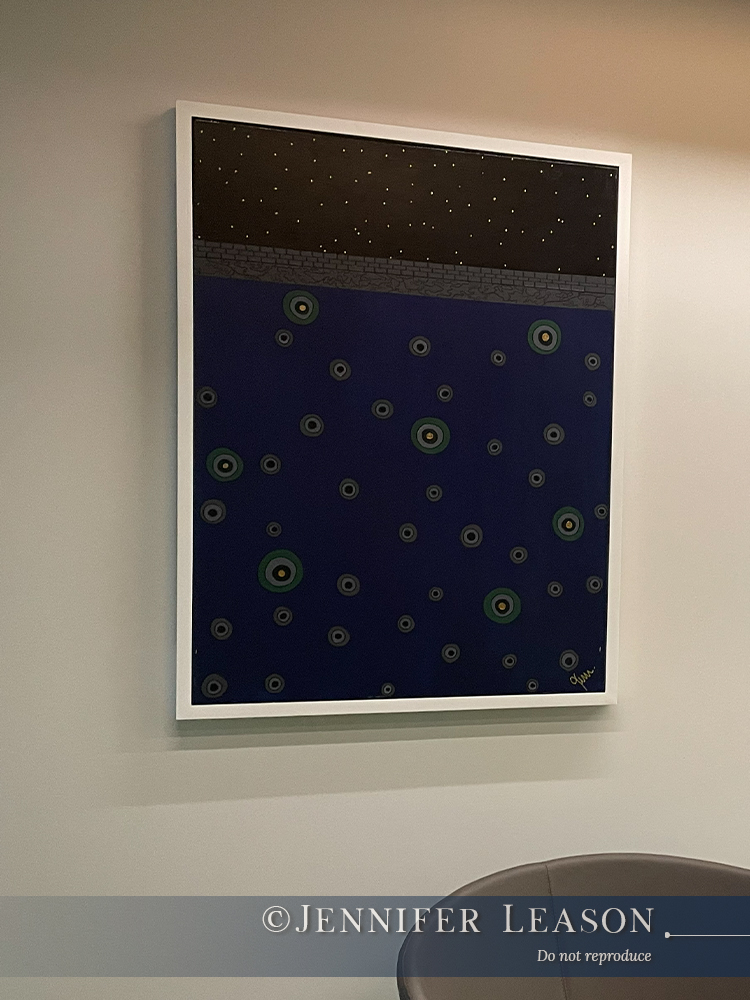
“Divided” shows fragmentation, barriers, and the emotional weight of unresolved historical injustices. Features symbolic barriers and scattered circles, representing disconnection and systemic challenges.
Indigenous Reference: Ermine’s (2007) concept of ethical space describes the tensions and necessary dialogue between Indigenous and Western worldviews, especially within institutions where dominant paradigms marginalize Indigenous voices.
Elder Kanahsohon Kevin Deer’s Reflections
Divided. We are all our own little islands, travelling down the river of life, because each of us are unique in our own way, and there will never ever be another one like us again. We think we are separated but in reality we are really all one. Then from time to time we need the ones who have a pure heart in their centre so that they can shed some light giving us hope, when because of various problems in life, our sacred centre can become dim. We are also reminded that the separation between the upper world and the lower world is like a blanket with little pinholes. Sometimes, in our minds, we try to envision it as a solid barrier, but through the cracks in the cement, in our death our spirits will penetrate through towards the light of unconditional love that shines through forever as stars and we get a sneak peek at the light shining through on every clear starry night.
North: Strengths and Gifts
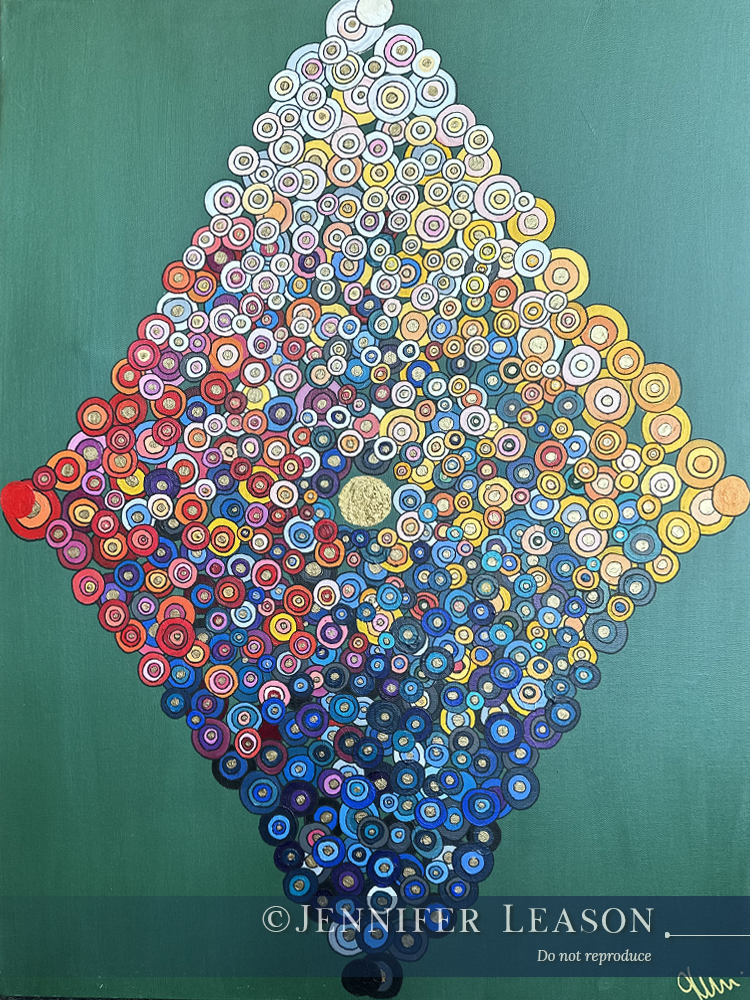
"Come Together"
Key Phrases
- "Empathy, loyalty, love"
- "Position to influence"
- "Peacemakers"
- "Realistic goals with collective effort"
Themes: Connection, compassion, courage, collective wisdom
Findings: Strengths include interpersonal empathy, community relationships, generosity, and a shared commitment to equity and justice. There’s a sense of collective movement toward advocacy and healing. This quadrant illuminated collective strengths: compassion, connection, courage, and wisdom. The emphasis was on interpersonal relationships, advocacy, and community-rooted leadership.
“Empathy, loyalty, and love. Peacemaking. Position to influence. Collective strength.”
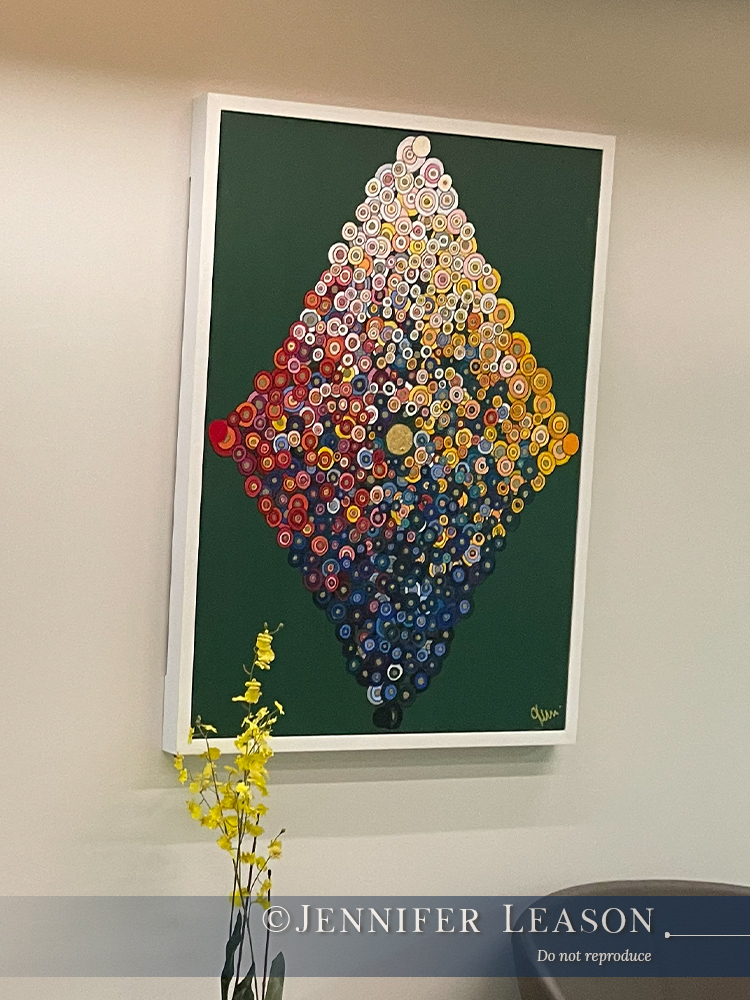
“Come Together” is a vibrant, dynamic, and layered, symbolizing the power of unified community action.
Indigenous Reference: The concept of nibwaakaawin (wisdom) within the Seven Sacred Teachings affirms the power of humility, love, and community in shaping ethical and impactful leadership (Benton-Banai, 1988; King, 2012).
Elder Kanahsohon Kevin Deer’s Reflections
Come Together. A teepee or triangle that when inverted creates this shape of symmetry. The shape depicts that the upper world and the lower world are directly connected. One half which is more whiter, represents the Creator. The other half which is darker represents his twin brother, who creates issues that we need to be mindful of, remembering that it’s the paired opposites whose energy we are influenced by and we must try to keep ourselves self-centred all the time by following the imaginary line where the two triangles intersect. We are also mindful that our paths begins in the east with the yellow and when we die we will exit in the west with the red.
Kanahsohon Kevin Deer Biography
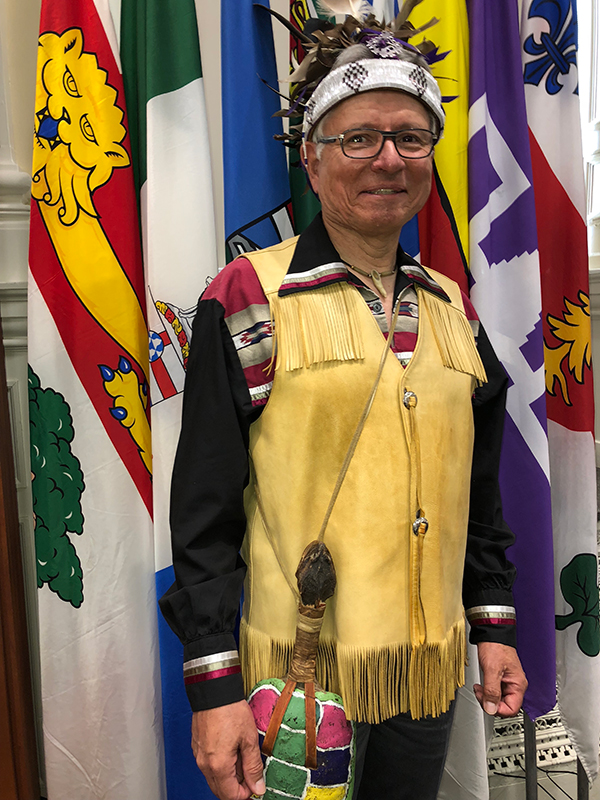
Ka’nahsohon Kevin Deer is from Kahnawake Mohawk territory in Quebec. For 30 years has been involved in Mohawk language retention and revitalization at the Mohawk Immersion School. He is also a faith keeper at the Mohawk Trail Longhouse which involves knowing sacred songs, dances, speeches and rituals. He enjoys discussing and presenting the Iroquoian world view, history, and philosophy. He was involved in the Kahnawake Police Commission (PSB) from 2005 to 2015. In May of 1990 participated in a ceremony calling for the return of the “Peacemaker” in Tyendineaga Ontario. In 1990 he was involved in the Oka Crisis using the power of peace to try to resolve that conflict. In September 1993 he assisted in the establishment of the new Mohawk community of Kanatsiohareke New York. In 2003 he was part of a planning committee of the historic event which involves horses coming across Turtle Island from British Columbia to Six Nations, Ontario to help “Wipe the Tears of the Seventh Generation” and to “Begin Healing of Mother Earth.” In September 2015, it was deeply involved in the Bretton Woods IV Convocation performing a daily Tobacco Burning Ceremony to help all participants gathered to see, to hear, and to speak more clearly about matters of global financial concern from a native First Nations perspective. In February 2016, he made a presentation on native spirituality at the United Nations World Inter-Faith Harmony week in New York. August 2016 performed a Welcoming and Healing Ceremony for the World Forum on Theology and Liberation in Montreal. November 2016 traveled to Standing Rock South Dakota to perform ceremonies with spiritual leaders and elders to help resolving the conflict. In March 2017 shared Indigenous Knowledge with the Prime Minister Trudeau’s Youth Council. March 2018 G7 Charlevoix Ministerial meeting on “Preparing for Jobs of the Future” conducted a Welcoming Ceremony using Indigenous Knowledge to help guide the discussions. November 2018 Parliament of World Religions Conference in Toronto conducted a Tobacco Burning Ceremony for harmony and world peace. June 16, 2023 at the Eagle, Quetzal, and Condor Summit, he was appointed spokesperson to share Indigenous Knowledge for North America.
Jennifer Leason Artist's Statement
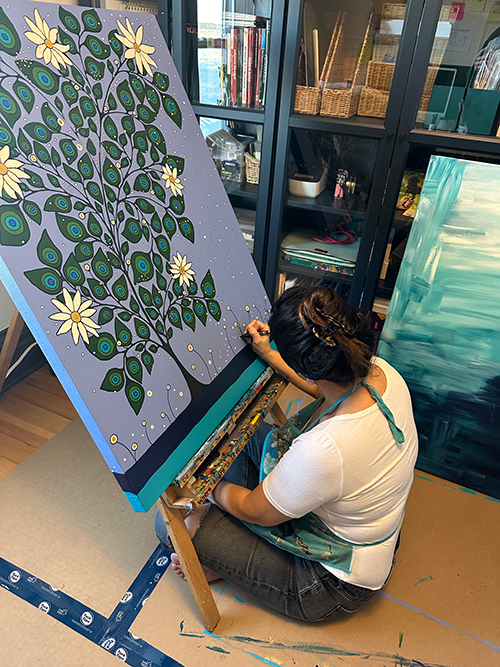
My artwork emerges from a deeply relational process, one that listens, reflects, and translates collective voice into visual form. Rooted in dialogue, the pieces respond to Concordia’s Faculty of Arts and Science as a community in transition. The pieces capture themes of uncertainty, connection, and transformation through layered landscapes, movement, and elemental imagery such as water, sky, and land. Each quadrant reflects a moment in time: where we are, what we carry, and where we are going. The art reflects holding both the tensions and the possibilities of institutional change. This work brings forward the importance of reflection, relationality, and balance as a pathway toward healing, reconnection, and shared understanding, learning, and growth now and into the future.
Thank you to the unceded lands of the Kanien’kehá:ka Nation. Thank you to Kanahsohon Kevin Deer for sharing your story, teachings, songs, ceremony and for guiding our visioning. Thank you to the Faculty for the opportunity to visit, learn, grow and connect in relationship, dialogue, song, story and art. Thank you for considering the artworks and what reconciliation means to you.