





Indigenous epidemiology in Canada:
Epistemic struggle towards evidence, authority, and governance
Dr. Jennifer Leason • Published 11 August 2026
Emerging practice: Indigenous Epidemiology
Indigenous epidemiology advances a strengths-based, mixed methods paradigm that integrates Indigenous statistics⁷ with population-level quantitative data⁸ and knowledge systems, oral histories, and community engaged research practices, ensuring that epidemiological evidence is both scientifically rigorous and culturally meaningful.⁹ Epistemic struggle towards evidence, authority, and governance
Indigenous epidemiology centres Indigenous governance over data¹⁰, community-defined health priorities¹¹, and contextualized interpretations of health patterns within the enduring structures of settler colonialism, racism, and state surveillance¹².

Here’s why this is important…
Modern epidemiology emerged in the 19th c. alongside the consolidation of the modern nation-state, colonial expansion, and the rise of bureaucratic forms of population management¹. While frequently narrated as a neutral scientific response to infectious disease, the historical development of epidemiology was inseparable from projects of social regulation², racial classification³, and colonial governance⁴.
Image of Michael Foucault
Epidemiology's . Histories
The development of epidemiology cannot be disentangled from Canadian colonial histories, policies, and projects⁵. Racialized populations were routinely constructed as sites of pathology, risk, and deficiency, while the structural conditions producing illness, land theft, forced relocation, starvation, state violence, and family separation were rendered…

"The complicated history
of the Hudson's Bay point blanket"
The iconic Hudson’s Bay point blanket has a complicated history with Indigenous people in Canada. These blankets first appeared in Canadian trading posts in the 1700s, and aside from bedding, they also served as a form of currency, and were fashioned into robes.
But they took on a darker history, with rumours swirling that they were used to spread smallpox among First Nations in the 1700s and 1800s….
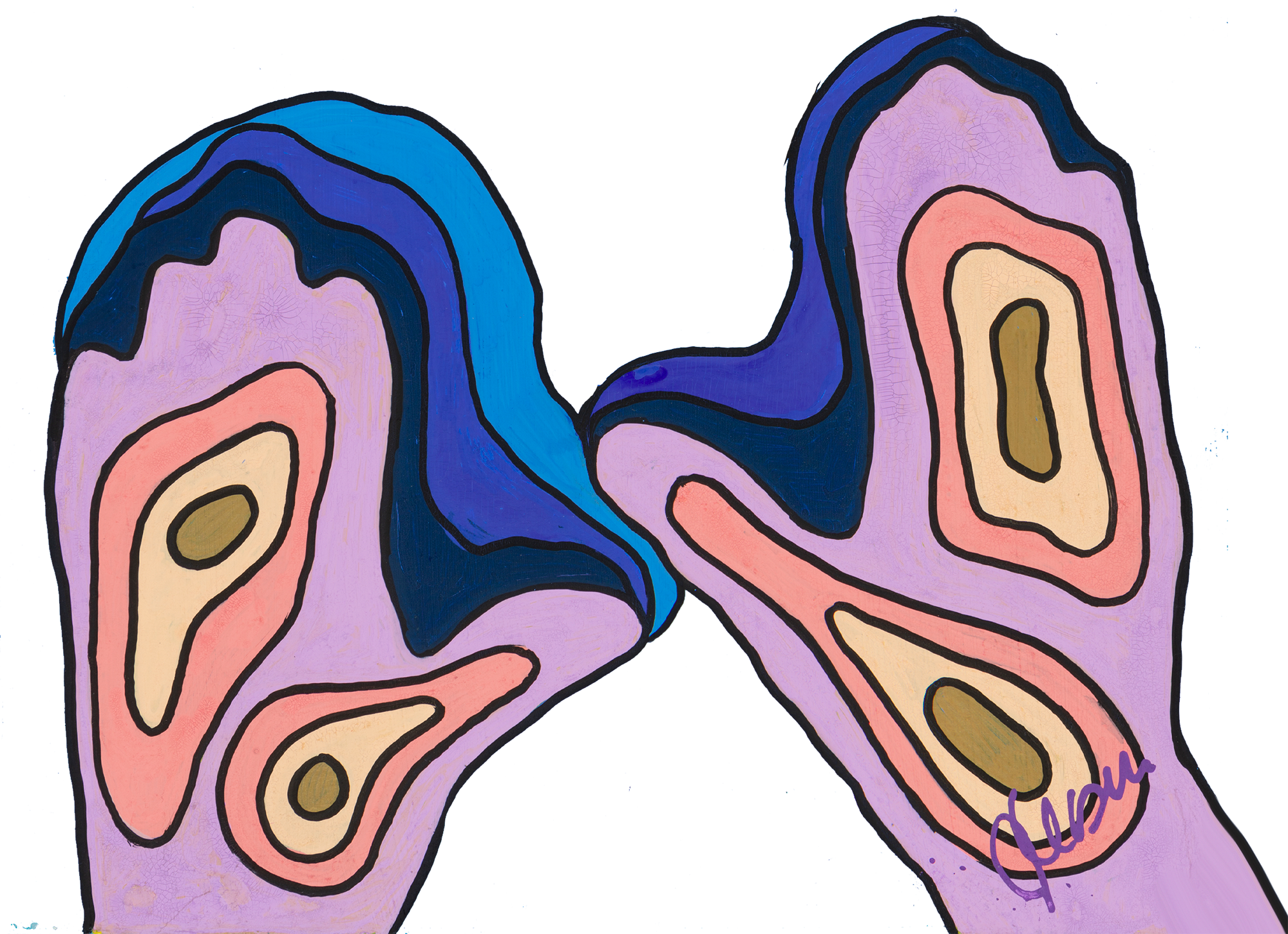
Rosalie Favell. “I awoke to find my spirit had returned,” 1999.
(Resilience Project)

Epistemic authority and racism:
Whose knowledge is recognized as authoritative?
Indigenous epidemiology emerges as a direct challenge to this disciplinary history that systematically privileges Western, positivist, and Eurocentric epistemologies, while racializing other forms of knowledge as subjective, cultural, or supplementary. This epistemic racism, unlike overt racism, operates through ostensibly neutral standards of rigour, evidence, and validity, embedding inequity within disciplinary norms. Epistemic racism is then enacted through hierarchies of evidence that position Western scientific knowledge as neutral and universal, whereby statistical inference, randomized trials, and causal modelling are inherently authoritative.⁷
Bibliography
Krieger, 2024
Foucault, 1975; Krieger, 2024
Kaufman, 1999
Krieger, 2020
Kim, 2019
Anderson, 2009; Burnett et al., 2020
(Bhambra, 2014; Grosfoguel et al., 2015).
Walter, 2016
Rowe et al., 2021
Jaworsky, 2019; Smylie & Firestone, 2015
Kukutai et al., 2016
Quinless, 2022
Prussing, 2018
ABSTRACT
Objectives Indigenous epidemiology has emerged as a critical intervention to address health inequities and the exclusion of Indigenous Peoples from population health research. While advances in Indigenous data sovereignty and community-led surveillance have strengthened ethical accountability, less attention has been given to the epistemic conditions that shape how Indigenous knowledge systems are evaluated, constrained, and authorized within epidemiological research. This article examines how routine methodological, governance, and interpretive practices constrain Indigenous epistemologies in public health research and introduces the Theory of Epistemic Containment.
Methods The analysis draws on a longitudinal, reflexive, meta-methodological study of institutional texts produced over 15 years (2011–2026), including peer-review reports, grant-adjudication feedback, research ethics correspondence, editorial decisions, and committee and governance deliberations. The study treats methodological negotiations as empirical evidence of how scientific authority is produced and contested.
Results The findings reveal recurring patterns of epistemic containment, including differential standards of methodological scrutiny, the relegation of Indigenous governance to ethical or contextual domains, the separation of Indigenous governance from epistemic authority, and asymmetrical authorization of causal claims and policy relevance. Quantitative epidemiological methods are routinely treated as neutral and self-authorizing, whereas Indigenous methodologies and governance systems are subjected to heightened justification, limitation, and restraint.
Conclusion This article advances the Theory of Epistemic Containment as a framework for understanding epistemic racism in Indigenous epidemiology. It argues that transforming population health research requires moving beyond methodological inclusion towards methodological accountability, recognizing Indigenous governance as an epistemically authoritative foundation for knowledge production, public health decision-making, and Indigenous self-determination.