

Contact me to arrange a keynote presentation at your conference.
Sample keynote topics are described below. Each will be adjusted to the theme and audience of your conference. Jump to:

Reclaiming Indigenous Birth

Indigenous women, families, and communities in Canada continue to experience disproportionate maternal and infant health disparities, in part due to policies that require many pregnant people in rural and remote communities to leave home weeks before birth to deliver in urban hospitals.
The Reclaiming Indigenous Birth project is an interdisciplinary, Indigenous-led research initiative examining the economic, health, and social-cultural impacts of obstetric evacuation policies while documenting the benefits of community-based Indigenous midwifery models of care.
Using mixed methods, including economic analysis of medical travel, systematic reviews of Indigenous midwifery models, and community-engaged digital storytelling with Indigenous birthing persons, the project generates evidence to inform perinatal health policy and support the resurgence of Indigenous midwifery.
By centring Indigenous knowledge, leadership, and lived experiences, the research identifies best practices to support First Nations, Métis, and Inuit families throughout pregnancy, birth, and postpartum care, while advancing culturally grounded, community-based approaches to maternal and infant health. The findings contribute to national conversations on health equity, Indigenous sovereignty in health care, and the return of birth to Indigenous communities.
Honouring Voices and Visions

Gwayakooshgawiin: A Relational Governance Theory
for Indigenous Research, Institutions, and Systems Change

Across disciplines, institutions, and policy systems, research and governance often separate knowledge from responsibility, analysis from consequence, and data from the communities whose lives it represents. Gwayakooshgawiin, an Anishinaabe relational theory of balance and ethical alignment, offers an alternative framework for understanding how knowledge, power, and responsibility move through institutions. This keynote introduces Gwayakooshgawiin as a theory of relational governance that situates truth within relationships rather than abstraction.
Keesis Saayewin: Living in Light
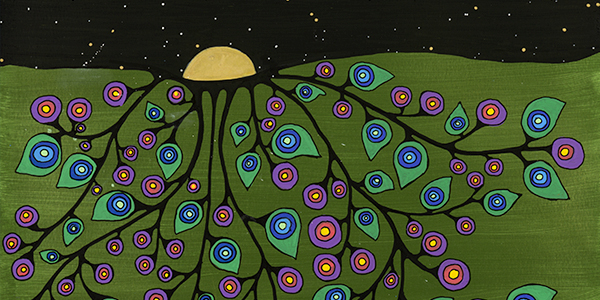
Across Indigenous studies, public policy, and reconciliation discourse, much of the scholarship has focused on documenting the harms of colonialism. While this work remains essential, it has unintentionally centred deficit narratives that obscure the profound resurgence already underway within Indigenous communities. Keesis Saayewin: Living in Light introduces a different approach: a strength-based framework that maps the infrastructures of Indigenous renewal across Canada. Drawing on Indigenous theory, community knowledge, and contemporary movements, the book documents how Indigenous peoples are rebuilding systems of governance, kinship, land stewardship, language revitalization, health, education, justice, and economic development.
Reclaiming Indigenous Birth
Presentation Objectives
- Describe the historical and policy context that led to obstetric evacuation and the displacement of Indigenous birth from community settings in Canada, and its impacts on maternal, infant, and family wellbeing.
- Examine emerging evidence from the Reclaiming Indigenous Birth project, including economic analyses of medical travel, community experiences of birth evacuation, and the outcomes associated with Indigenous midwifery and community-based perinatal care models.
- Identify policy, health system, and workforce strategies that support the return of birth to Indigenous communities, including Indigenous midwifery expansion, culturally grounded perinatal supports, and community-driven models of care.
Indigenous women, families, and communities in Canada continue to experience disproportionate maternal and infant health disparities, in part due to policies that require many pregnant people in rural and remote communities to leave home weeks before birth to deliver in urban hospitals.
The Reclaiming Indigenous Birth project is an interdisciplinary, Indigenous-led research initiative examining the economic, health, and social-cultural impacts of obstetric evacuation policies while documenting the benefits of community-based Indigenous midwifery models of care.
Using mixed methods, including economic analysis of medical travel, systematic reviews of Indigenous midwifery models, and community-engaged digital storytelling with Indigenous birthing persons, the project generates evidence to inform perinatal health policy and support the resurgence of Indigenous midwifery.
By centring Indigenous knowledge, leadership, and lived experiences, the research identifies best practices to support First Nations, Métis, and Inuit families throughout pregnancy, birth, and postpartum care, while advancing culturally grounded, community-based approaches to maternal and infant health. The findings contribute to national conversations on health equity, Indigenous sovereignty in health care, and the return of birth to Indigenous communities.
Honouring Voices and Visions
Presentation Objectives
- Describe the structural and colonial factors contributing to the over-representation of Indigenous women in prisons and the implications for sexual, reproductive, and maternal-child health.
- Share the Indigenous research frameworks and methodologies used in the Honouring Voices & Visions.
- Identify key gaps in reproductive and maternal health data and policy for Indigenous women in prison and explore opportunities for equity-informed health system and policy reform.
Gwayakooshgawiin: A Relational Governance Theory
for Indigenous Research, Institutions, and Systems Change
Presentation Objectives
- Understand the core principles of Gwayakooshgawiin as a relational Indigenous governance theory that situates truth, knowledge, and responsibility within ethical relationships.
- Examine the seven relational searches (ME → WE → RE → SEE → KEY → DE → BE) as epistemic movements that guide inquiry, power analysis, and systems change across research and institutional contexts that situate truth, knowledge, and responsibility within ethical relationships.
- Application of the Gwayakooshgawiin framework to interdisciplinary research, governance, and policy settings to identify relational misalignment, restore ethical space, and redesign systems toward collective wellbeing and future generations
Across disciplines, institutions, and policy systems, research and governance often separate knowledge from responsibility, analysis from consequence, and data from the communities whose lives it represents. Gwayakooshgawiin, an Anishinaabe relational theory of balance and ethical alignment, offers an alternative framework for understanding how knowledge, power, and responsibility move through institutions. This keynote introduces Gwayakooshgawiin as a theory of relational governance that situates truth within relationships rather than abstraction.
Grounded in Indigenous epistemology and informed by Two-Eyed Seeing and Ethical Space of Engagement, the framework explains how knowledge systems can interact without domination while remaining accountable to community, land, and future generations. The theory becomes operational through seven relational searches—ME, WE, RE, SEE, KEY, DE, and BE—which guide individuals and institutions from awareness to collective responsibility, structural analysis, the refusal of harm, and the design of ethical futures. Rather than serving as a single research method, Gwayakooshgawiin functions as a meta-methodological architecture that guides interdisciplinary inquiry, institutional decision-making, and governance reform across sectors, including health, justice, education, and policy.
By repositioning knowledge within relational accountability, the framework invites scholars, leaders, and practitioners to reconsider how truth is produced, how harm becomes structured, and how systems can be redesigned to support the continuity of life for future generations.
Keesis Saayewin: Living in Light
Presentation Objectives
- Examine how deficit-based narratives have shaped scholarship and public discourse about Indigenous peoples and explore the importance of strength-based frameworks that center Indigenous resurgence, governance, and community-led innovation.
- Identify key domains of contemporary Indigenous resurgence—including governance, land stewardship, kinship systems, language revitalization, health, education, and economic development—and the Indigenous-led movements and organizations advancing this work across Canada.
- Reflect on how educators, policymakers, researchers, and institutions can shift from symbolic reconciliation toward meaningful “reconcili-action” by recognizing, supporting, and learning from Indigenous systems of knowledge, care, and governance.
Across Indigenous studies, public policy, and reconciliation discourse, much of the scholarship has focused on documenting the harms of colonialism. While this work remains essential, it has unintentionally centred deficit narratives that obscure the profound resurgence already underway within Indigenous communities. Keesis Saayewin: Living in Light introduces a different approach: a strength-based framework that maps the infrastructures of Indigenous renewal across Canada. Drawing on Indigenous theory, community knowledge, and contemporary movements, the book documents how Indigenous peoples are rebuilding systems of governance, kinship, land stewardship, language revitalization, health, education, justice, and economic development.
Organized across eleven domains of resurgence—from identity and anti-racism to land stewardship, maternal health, digital nations, and knowledge sovereignty—the work shifts the analytic lens from damage to repair, highlighting Indigenous-led organizations and initiatives that are actively restoring cultural continuity and collective wellbeing. Rather than asking what colonialism has broken, this keynote asks: What is already working—and what does it teach us about building the future? By illuminating these living infrastructures of resurgence, the presentation invites scholars, policymakers, educators, and practitioners to re-imagine reconciliation not as a symbolic gesture, but as the recognition and strengthening of Indigenous systems already lighting the path forward.